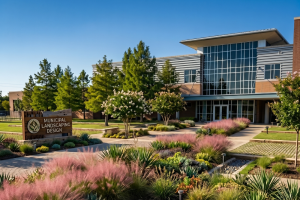
 Municipal building landscaping design is often the first physical interaction the public has with the agency inside. Clean lines, healthy plantings, and entryways that are managed to keep up suggest professionalism and trust. Public buildings must comply with stormwater runoff regulations, and landscaping plays a major role in meeting these requirements. The principles remain the same whether you’re planning commercial building landscape design for a courthouse, city hall, or any office building landscape. Successful municipal landscape projects balance esthetics with functionality and accessibility while considering long-term maintenance. We’ll walk you through planning your project in this piece, covering core design principles and essential landscape elements. You’ll also learn plant selection strategies that create welcoming, compliant spaces for your community.
Planning Your Municipal Landscape Project
Understanding Site Requirements and Restrictions
Site assessment forms the basis of successful municipal landscape design. You should evaluate topography, soil conditions and hydrology first to understand what the land offers and what constraints exist. Soil testing determines texture, structure and pH levels, which can vary across different areas of your property. Changes in color, moisture and compaction indicate varying soil conditions.
You need to map existing water features, drainage patterns and areas where water pools during storms. Impervious surface areas like roofs, driveways and parking lots require calculation, then estimate stormwater runoff volumes. Water movement patterns prevent flooding issues and help integrate stormwater management systems.
You cannot overlook legal and regulatory compliance. Local zoning laws, building codes and any restrictions that affect your project need research. Site analysis helps prepare designs that adhere to these rules and identifies protected natural resources or flood zones that you must think over.
Working With Budget Constraints
Budget season for most commercial properties runs from August through October. Final approvals come in late fall. An early start allows you to secure the right landscaping partner before schedules fill up and avoid surprise costs. Experts recommend allocating between 25 and 35 percent of your overall budget for commercial landscaping projects.
Your budget should account for both operational and capital costs. Operational expenses include recurring maintenance like mowing, trimming and irrigation inspection. Capital costs cover one-time improvements such as drainage systems, irrigation upgrades and new plantings. You should reserve 10 to 15 percent of your budget for unexpected expenses.
Evaluating Current Landscape Conditions
A walk-through of your property identifies areas that need improvement, such as damaged hardscaping, outdated designs or underperforming plants. Base your upgrade priorities on effect and urgency. Entrance areas deserve primary attention since they create the first impression for visitors.
Coordinating With Public Works and Security Teams
Public Works departments oversee critical infrastructure that includes streets, sidewalks, traffic signals, landscaping and public facilities. Coordination with these teams then ensures your landscape plans line up with existing infrastructure and long-term municipal goals. They manage ADA compliance programs, which directly affects your accessibility planning. Professional landscaping companies can partner with you for detailed assessments, cost estimates and timelines that account for public works schedules and security requirements.
Core Design Principles for Municipal Buildings
Creating Welcoming Front Entrances
Public sector landscapes favor clean, formal layouts over ornamental or experimental design. Symmetry, clear sightlines, and low-profile plantings help convey order and approachability. They minimize maintenance issues. The front entrance of an office building is its focal point. A clean, clear pathway bordered with low-maintenance shrubs or ornamental grasses creates a sense of direction and order.
Retaining walls add depth and volume to the entrance. They provide additional planting space and deliver privacy benefits because they can screen views of parking lots. A sloped entrance helps mask parking lots and buildings behind the entrance. This improves curb appeal and the overall esthetic.
Ensuring ADA Compliance and Accessibility
Pathways must be at least 36 inches wide. They need a firm, stable, slip-resistant surface to accommodate wheelchair users and those with mobility aids. Ramps are required for any elevation change over ½ inch, with a maximum slope of 1:12 and handrails for additional support. Walkways should not exceed slopes of 1:20.
Entrances should have smooth, step-free transitions. Marked signage showing available routes must follow standards for accessibility. Braille and tactile signs at key locations such as entrances provide wayfinding for visually impaired individuals.
Balancing Security With Openness
Government campuses must often balance security and openness. Landscaping becomes a tool for visual control and subtle barrier creation. It separates pedestrian zones from restricted areas without the need for fencing. Bollards, retaining walls, berms, and dense shrub masses serve dual roles. They guide foot traffic and form physical barriers that reduce vehicle access to sensitive areas while maintaining an open, civic character.
Security solutions should incorporate multipurpose elements that complement the neighborhood context. Many site elements can be reinforced structurally to perform as part of a perimeter barrier. These include benches, bus stops, streetlights, and planters.
Incorporating Stormwater Management
Bioswales, permeable pavements, and retention basins can be integrated into the site plan to meet code requirements. They also enhance the landscape’s visual and ecological value. Rain gardens are estimated to collect around 8 million gallons of water per year. Rain gardens redirect thousands of gallons of stormwater from city sewers and reduce sewage overflow into local waterways during storms.
Essential Municipal Landscape Elements
Visible Signage Areas
City signage defines municipal identity and helps residents guide through public facilities. Clear wayfinding systems reduce confusion and improve accessibility for visitors. Gateway signage, monument signs and directional systems must meet ADA requirements while remaining legible for diverse audiences. Material selection matters since municipal signs face harsh weather and heavy use. Weather-resistant materials such as heavy-duty steel, aluminum panels and laminated wood withstand long-term exposure. Faux painted metal often replaces pressure-treated wood to improve durability and reduce maintenance.
Outdoor Seating and Common Spaces
Public seating creates opportunities to linger, connect and form attachment to surroundings. Success requires more than benches placed at random, though. Contextual factors matter and include seating design, location and direction. Flexibility allows personal shaping of experience, while strategic placement along thoroughfares lets people slow down without compromising views. Benches facing each other invite conversation, while single benches provide solitude. Maintenance includes material choice, since steel cleans easier while wood offers more comfort.
Walkways and Pathways
Walkways guide movement through municipal spaces. Paths should be 35 to 40 inches wide to let two people walk side-by-side. Build walkways in sections to handle elevation changes. Steps should be about seven inches high and installed at regular intervals to prevent tripping. Material options range from pavers and flagstone to gravel and concrete, each with distinct maintenance and esthetic profiles.
Planting Beds and Layered Landscapes
The ground plane functions as the landscape floor and influences how people move through spaces. Vertical planes create outdoor walls and enclose areas. Layered planting beds add depth and visual interest while defining zones within office landscaping projects.
Water Features for Public Spaces
Water features draw people into public spaces through triangulation, the strategic placement of amenities. Successful placemaking surrounds fountains with complementary elements like green spaces and seating, along with nearby food vendors.
Plant Selection and Installation Best Practices
Choosing Native and Drought-Tolerant Species
Native plant selection delivers measurable financial and environmental returns for municipal landscape projects. Research shows that native prairie landscaping costs 56% less to install than traditional landscaping, with average annual savings of $3,400 per acre. These species adapt to local soil and climate conditions. Once they take root, you can eliminate expensive pesticides, fertilizers and supplemental watering. Drought-tolerant options like sedum species, little bluestem and prairie dropseed excel in challenging conditions and maintain visual appeal. For municipal projects near roadways, salt-tolerant evergreens such as mugo pine and juniper varieties withstand harsh winter conditions without sacrificing appearance.
Planning for Seasonal Color Rotation
Rotation schedules run three to four times yearly. New plantings go in during March, May and September. Spring installations feature pansies, violas and bulbs like daffodils and tulips. Summer bloomers include petunias, marigolds and snapdragons. Fall transitions to chrysanthemums and ornamental cabbage. Position color beds around entryways, along walkways and near signage for maximum effect.
Using Hardscaping to Reduce Maintenance
Permeable walkways and patios eliminate areas that require mowing and edging while addressing stormwater requirements. Strategic hardscaping balances professional appearance with reduced ongoing maintenance needs.
Installing Irrigation Systems
Drip irrigation systems achieve up to 90% efficiency when designed correctly. These systems reduce water consumption by 30 to 60 percent compared to conventional methods. Smart controllers, soil moisture sensors and rain sensors optimize schedules. They prevent overwatering damage to plant materials and infrastructure.
Municipal landscaping projects require careful planning, but the results are worth the effort. You create spaces that serve your community well at the time you balance esthetics with functionality. Native plants and smart irrigation systems reduce long-term costs. Available pathways and security features protect visitors. Assess your site conditions and budget constraints first, then partner with professionals who understand public sector requirements and have unmatched experience. Your investment today builds trust and civic pride for years to come.
FAQs
Q1. What should be considered when planning a municipal landscape project? Start by evaluating site conditions including topography, soil quality, and drainage patterns. Conduct soil testing to determine pH levels and texture, map existing water features, and calculate stormwater runoff from impervious surfaces. Additionally, research local zoning laws, building codes, and ADA compliance requirements to ensure your design meets all regulatory standards.
Q2. How much should municipalities budget for commercial landscaping projects? Experts recommend allocating between 25 and 35 percent of your overall budget for commercial landscaping projects. This should cover both operational costs (recurring maintenance like mowing and irrigation) and capital costs (one-time enhancements such as drainage systems and new plantings). It’s wise to reserve 10 to 15 percent for unexpected expenses.
Q3. What are the ADA requirements for municipal building pathways? Pathways must be at least 36 inches wide with a firm, stable, slip-resistant surface to accommodate wheelchairs and mobility aids. Ramps are required for elevation changes over ½ inch, with a maximum slope of 1:12 and handrails for support. Walkways should not exceed slopes of 1:20, and entrances need smooth, step-free transitions with clearly marked accessible routes.
Q4. Why should municipalities choose native plants for landscaping? Native plants cost 56% less to install than traditional landscaping and save an average of $3,400 per acre annually. They adapt naturally to local soil and climate conditions, eliminating the need for expensive pesticides, fertilizers, and supplemental watering once established. This makes them both environmentally sustainable and cost-effective for long-term maintenance.
Q5. How efficient are drip irrigation systems for municipal landscapes? Drip irrigation systems achieve up to 90% efficiency when properly designed and can reduce water consumption by 30 to 60 percent compared to conventional irrigation methods. When combined with smart controllers, soil moisture sensors, and rain sensors, these systems optimize watering schedules while preventing overwatering damage to plants and infrastructure.
We Provide Commercial Landscaping Design and Maintenance Services for Municipalities
Landscaping installation and maintenance are essential components of creating and preserving visually appealing and functional outdoor spaces. Effective landscaping installation involves the strategic placement of various elements such as plants, trees, hardscapes, and irrigation systems to enhance the aesthetic and environmental value of a property.
> Learn More
Contact Us (859-781-0677) for More Information!
—
About Davis Landscaping
Davis Landscape Design & Installation has been providing landscaping services to customers in Northern Kentucky and Greater Cincinnati since 1965! We know that the landscape design process can be overwhelming, so we work with you tirelessly to better understand your vision. At Davis Landscape Design & Installation, we’re on your team and we know how to listen and deliver.